





加密货币最新消息 . 2026.03.31
Bitcoin Mining, Policy, and Power: Infrastructure Is the Real Battleground
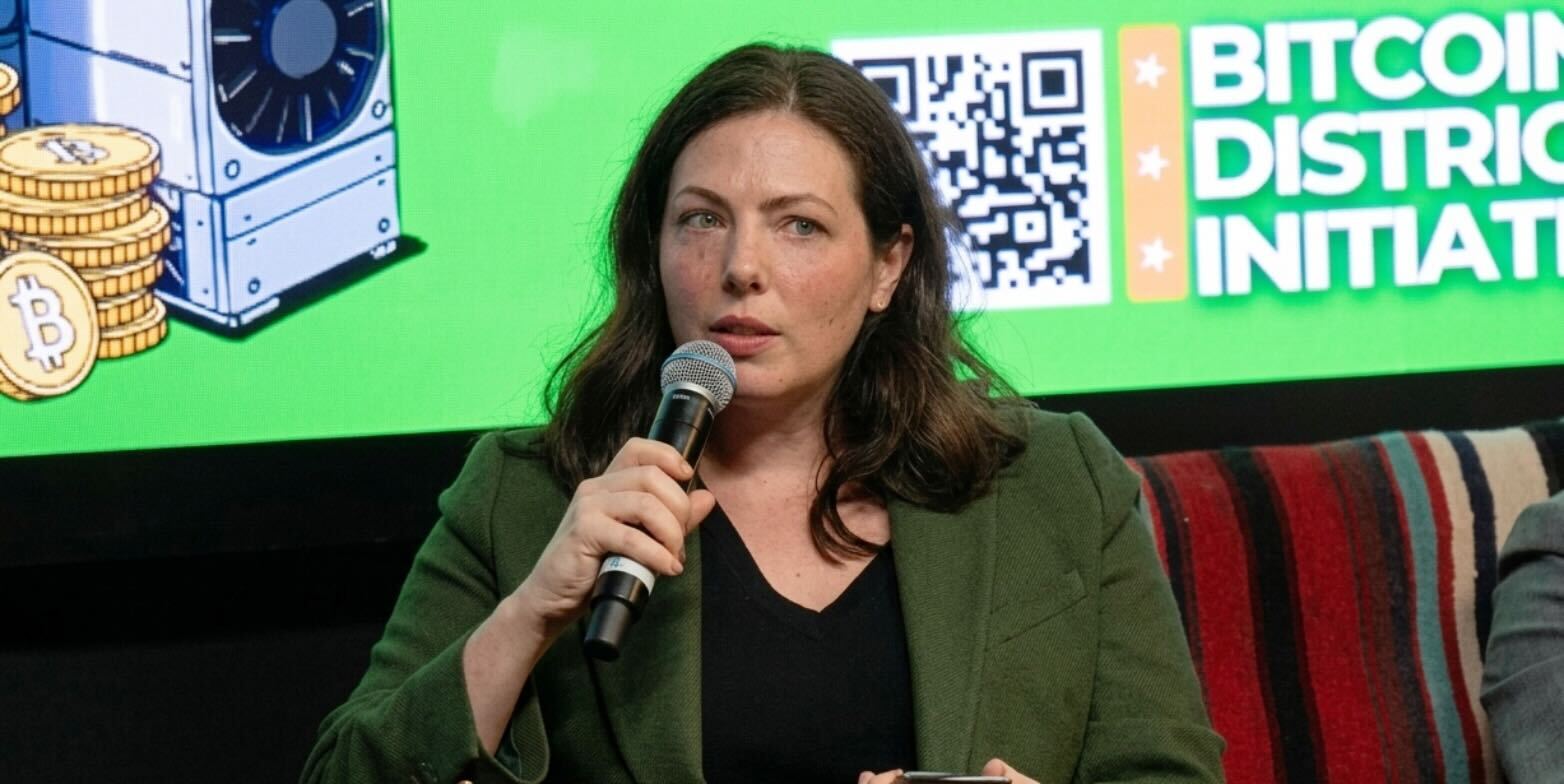
Elizabeth Duchek (Bitdeer) joined a discussion with James Cheng (Canaan) and Darcy Daubaras (Hive Digital) at PubKey DC during the DC Blockchain Week. Elizabeth outlined how Bitcoin mining has shifted from a fringe topic in Washington D.C. to a central issue spanning energy, financial services, and industrial policy. The conversation focused on how miners are increasingly positioning themselves as digital infrastructure operators, where control over power defines long-term competitiveness.
Bitcoin Mining, Policy, and Power: Infrastructure Is the Real Battleground
Elizabeth Duchek (Bitdeer) joined a discussion with James Cheng (Canaan) and Darcy Daubaras (Hive Digital) at PubKey DC during the DC Blockchain Week. Elizabeth outlined how Bitcoin mining has shifted from a fringe topic in Washington D.C. to a central issue spanning energy, financial services, and industrial policy. The conversation focused on how miners are increasingly positioning themselves as digital infrastructure operators, where control over power defines long-term competitiveness.
A lightly edited transcript follows.
An introduction to Bitdeer
Jesse (Blocksbridge Consulting): Can you briefly introduce yourself and the company you represent?
Elizabeth: Hi, everyone. My name's Elizabeth Duchek, and I am the Associate Director of Government Relations for Bitdeer. We are a NASDAQ-listed digital infrastructure company with three main business verticals. That includes Bitcoin mining, ASIC design, and AI/HPC.
We are headquartered in Singapore, but we have a global reach with a very quickly expanding footprint in the United States. A little over half of our global power capacity is located in the US, deployed across several states, Texas, Ohio, Tennessee, and a manufacturing facility upcoming in Nevada.
From fringe to policy priority
Jesse: Can you share your general perspective about what you have been able to observe at the DC Blockchain Summit, and, in general, during your work here in DC, when it comes to the policy side of Bitcoin mining?
Elizabeth: Yeah. The interesting thing on the policy side is how quickly it has evolved to become so widespread. I'm a former Senate staffer. I was on the Hill less than ten years ago, and Bitcoin and Bitcoin mining were really not a topic of discussion. It was still considered sort of a fringe topic.
In the last two years, it's just exploded policy-wise, and it's touched almost every area of policy. It's touching financial services and energy. And something that I wish more policymakers knew is that Bitcoin mining can be an ally to energy infrastructure as opposed to a detriment.
I think when it comes to Bitcoin mining, a lot of policymakers hear their constituents talking about the cost of living, inflation, and energy prices. Bitcoin mining becomes a convenient, albeit inaccurate, scapegoat. The industry has a lot of work to do in educating policymakers on how Bitcoin mining can be an ally to their communities.
Mining as digital infrastructure
Jesse: Most people don't understand the size of the operations of Bitdeer, the power capacity the company has, and how widespread it is worldwide. Do you want to add anything to the way Bitdeer thinks about power, and what we were talking about?
Elizabeth: At Bitdeer, we consider ourselves a digital infrastructure company. But Bitcoin mining is always going to be the core tenet of our operations because we see Bitcoin mining as the building blocks for AI, laying the foundation for AI expansion as it grows across industries.
There's a little bit of an identity crisis amongst some of the companies. You know, are you a data center? Are you a Bitcoin miner? We are. Our answer is yes, and Bitcoin is always going to be the sort of central tenet of that.
What will matter by 2030
Jesse: What do you think is going to be a successful Bitcoin mining company in 2030 and 2040?
Elizabeth: I think in 2030 it's going to be less about how many Bitcoins are left to mine, and more about who controls the energy infrastructure behind it. And that's why for Bitdeer it's so important that we're vertically integrated, that we are able to own and operate the energy that we produce for our Bitcoin mining.
免责声明
本文提供的资讯仅供一般参考,并不构成也不应被理解为任何产品的广告、专业意见、要约、招揽或建议,也不涉及任何产品的交易。对于任何资讯的公正性、准确性、及时性、完整性或正确性,以及任何产品的未来回报、表现或结果,Bitdeer不作出任何明示或暗示的保证、陈述、担保或承诺。在适用法律允许的范围内,Bitdeer明确排除与本文提供的资讯有关的任何和所有责任,并且在任何情况下,Bitdeer都不对任何人因依赖本文的任何资讯而产生的任何损失或遭受的损害负责。


