Suscríbase para estar al día de las últimas noticias, anuncios y publicaciones de blog.
In the first installment of this series, we explored a foundational idea: Bitcoin mining was never just about digital currency. It was designed as a long-term energy system running on a supply schedule that extends over more than a century. In the second installment, we examined how that system is not unique to Bitcoin. Modern AI data centers are built on the same physical foundation—chips, power, cooling, and infrastructure—all working together to turn electricity into Bitcoin mining and AI processing at scale.
In the first installment of this series, we examined a simple but powerful idea: Bitcoin mining was always designed as an energy system.
Artificial intelligence is having its electricity moment. Across global markets, utilities are scrambling to connect massive new data centers. Tech giants are locking in gigawatts of power. Transmission queues to connect the new generation to the grid are backlogged. Electrical substations are suddenly strategic assets. The AI boom has made one thing clear: computation is no longer limited by software. It is limited by energy.
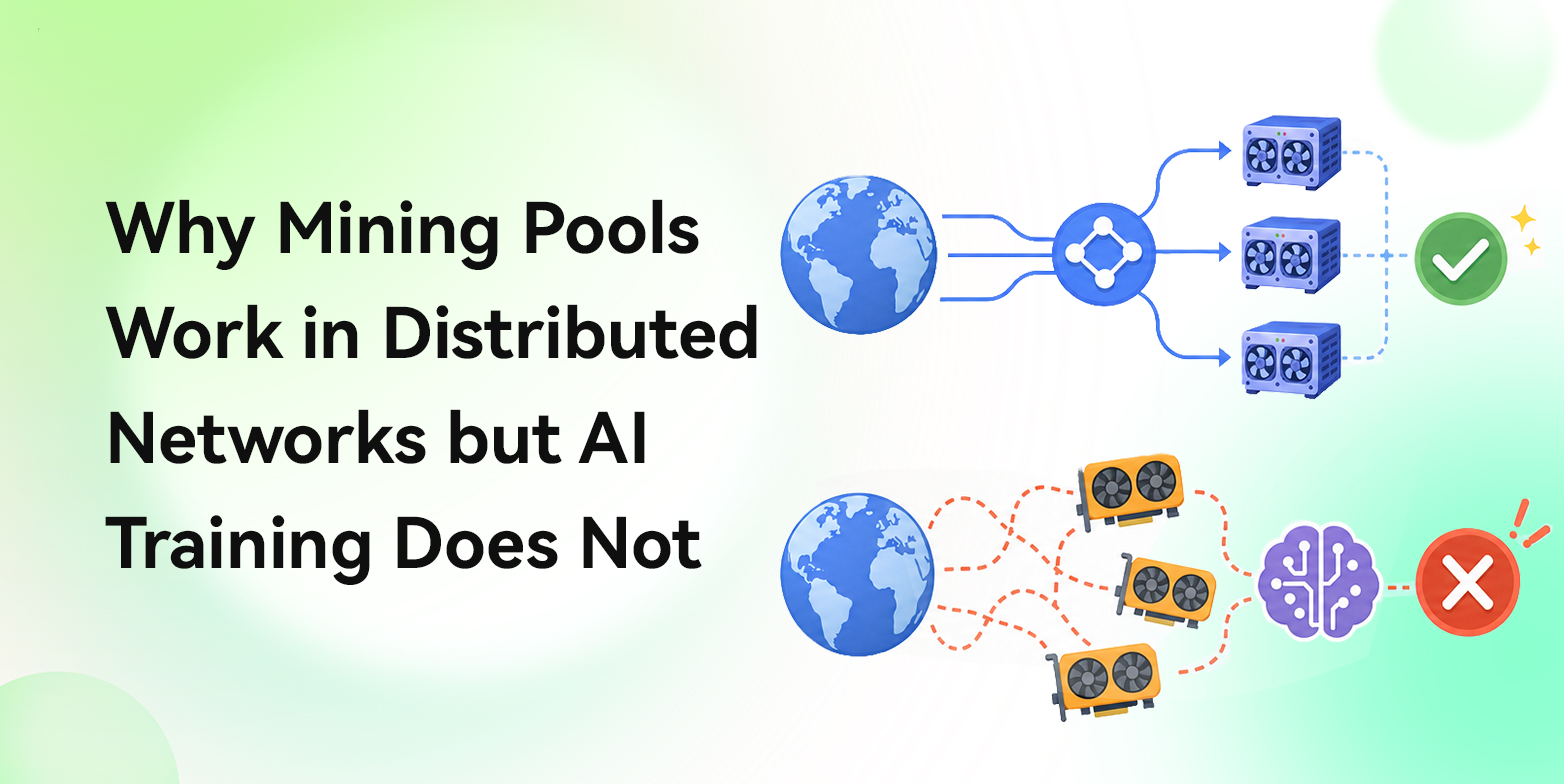
This blog uses simple language to explain the key issues behind this difference between Bitcoin mining and AI training. We show why mining pools are naturally fit for distributed setups, why large AI model training struggles to run this way, and why model training is so sensitive to network latency.
Cooling design is key for Bitcoin mining profits: air vs hydro cooling, efficiency, and uptime.
Bitcoin mining bottleneck: ASICs vs clean power readiness, grid interconnection, and infrastructure timelines.
This blog will help you understand what hashrate is and why institutions now treat it as a manageable "revenue capacity."
This blog uses simple industry logic to break down the physical limits of these two types of computing power. We look at physical chip limits and the true meaning of scarcity for both tokens. This will help you understand the core math behind both assets.
This blog breaks down the core reasons why AI chips face economic retirement. We also look at secondary opportunities for older GPUs, including low-priority inference, offline rendering, Zero-Knowledge (ZK) proof calculations, and DePIN distributed compute networks.
© 2026 Bitdeer. Todos los derechos reservados
Bitdeer App
Empresa
Productos
Servicio
Soporte