
What Are Hashrate and Hashprice? How Bitcoin Miners Manage Mining Revenue
2026.05.21
This blog will help you understand what hashrate is and why institutions now treat it as a manageable "revenue capacity."
Many people still view Bitcoin mining simply as buying a machine, plugging it in, and mining BTC. But for large mining companies, the real question is no longer just how many coins they can mine today. Instead, they look at key business questions. Can electricity costs cover the expenses? How long will it take for the machines to pay back? Will future revenues keep dropping? Can the same data center pivot to run AI compute services?
This blog will help you understand what hashrate is and why institutions now treat it as a manageable "revenue capacity." You will see how mining companies use power, hardware, financial tools, and business mixes to reduce income volatility and improve long-term operational stability.
What Is Hashrate? Why It Is More Than Just a Technical Parameter
In computer networks, hashrate is usually defined as the number of hash calculations a machine runs per second. In simpler industrial terms, hashrate can be seen as the speed at which a miner guesses digital passwords.
The Bitcoin network awards the right to write the ledger through a massive guessing game of random numbers. The more attempts a miner can make per second, the higher its chance of hitting the right answer in the global competition. This allows the miner to win a share of the new block rewards. At this level, hashrate is a pure technical metric that measures the physical output speed of the hardware. A higher hashrate simply means a better chance of mining a new block.
Why Do Equal Hashrates Earn Different Amounts of Money?
In actual operations, two mining farms with the same total hashrate often show very different financial results. This proves that hashrate alone does not equal profit. The earning power of each unit of hashrate depends on several core variables.
The spot price of Bitcoin directly decides the cash value of the output. The higher the BTC price, the more valuable the mined coins are. Next, changes in the total network hashrate trigger dynamic updates to the network difficulty. Higher difficulty means each unit of hashrate receives fewer rewards. Additionally, electricity pricing structures in different regions are the main factor for operating costs. Higher power bills easily eat into profits. More importantly, hardware energy efficiency matters. For example, a new model like the Sealminer A4 Ultra Hyd uses less than 10 J/TH. It can produce far more hashrate than older machines while consuming the exact same amount of electricity.
Therefore, hashrate is only one part of the earning equation. The underlying power cost, network difficulty shifts, and hardware depreciation speed are the true factors that determine whether the hashrate asset can create positive cash flow.
What Is Hashprice?
To measure the mining environment more accurately, the industry uses a metric called Hashprice. Simply put, Hashprice shows how much U.S. dollar revenue a unit of hashrate can generate in one day. People usually calculate this per Petahash (P) per day, or per Terahash (T) per day.
In precise operations, miners view Hashprice as their most important financial barometer. If you only look at the price of Bitcoin, you will miss how rising network difficulty eats away at your returns. Hashprice combines four key variables into a single fiat currency metric: coin price, network difficulty, base block rewards, and on-chain transaction fees. By watching the shifts in Hashprice, operators can easily see if a specific machine slot can cover its daily electricity cost. This metric is much closer to the actual operational reality of a mining farm than the coin price alone.
Why Mining Companies Act Like Asset Managers Instead of Just Coin Miners
After the fourth block reward halving, the industry entered a clear period of shrinking profit margins. In today’s operations, Hashprice has faced long-term pressure because the base block reward cut in half while the total network hashrate remained very high. This has squeezed the profit margins of mining companies. It means the traditional expansion model of simply stacking more machines to catch a bull market run is no longer highly viable.
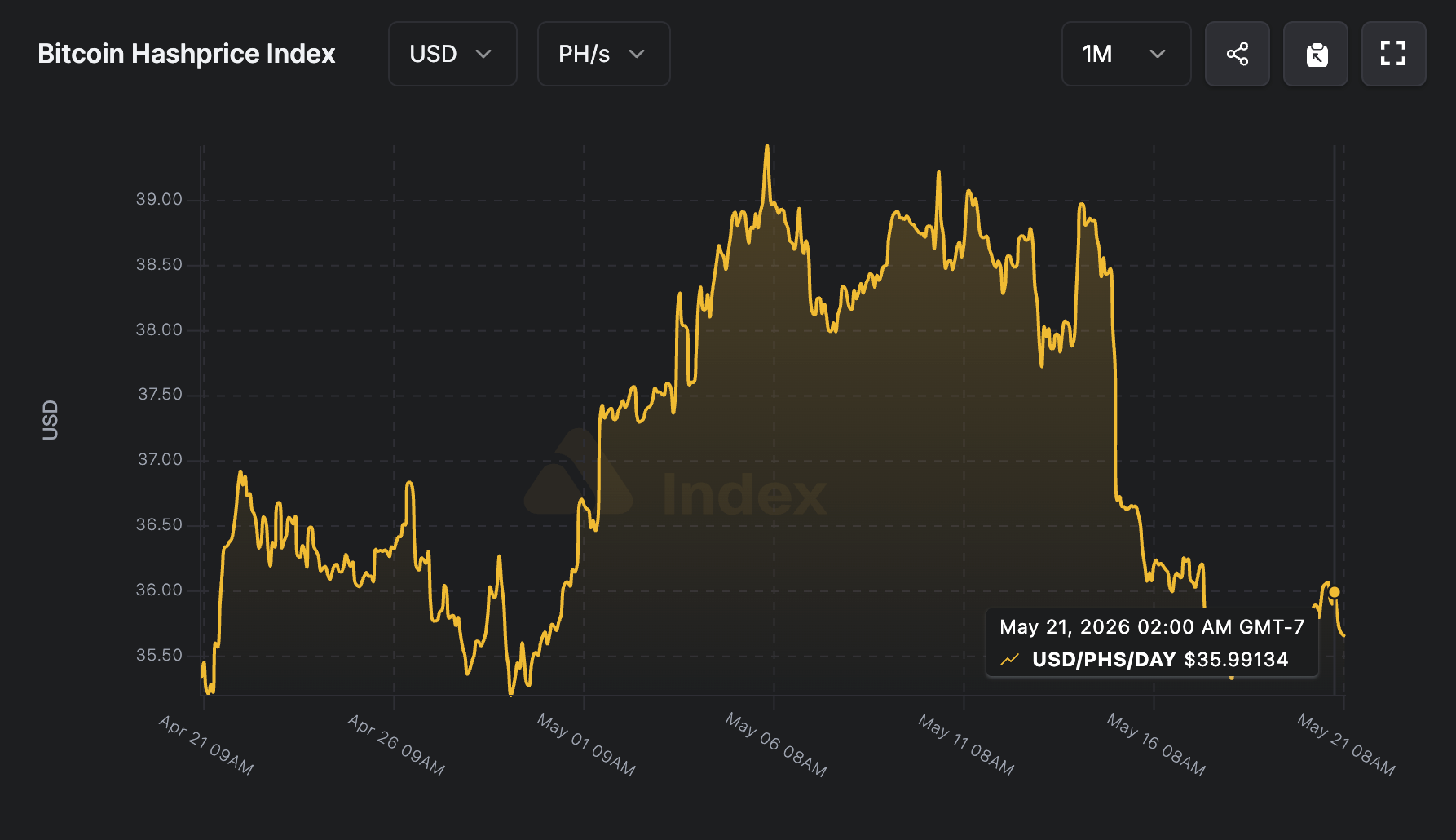
As power allocations tighten and capital expenditures for equipment rise, competition among mining companies is no longer just about buying more machines. It is about who can manage power, hardware, and cash flow better. Mature mining operators now need to monitor and smooth out three asset ledgers in real time:
First, the power ledger helps evaluate the long-term stability of the base electricity price. It also checks if the system is flexible enough to join grid demand-response programs to swap for power credits during extreme weather or peak price hours.
Second, the machine ledger evaluates the payback period over the total lifecycle of the hardware. During upgrade cycles, operators must calculate exactly how long it takes for hardware to pay back and when to retire old models. This helps them increase hashrate density within limited rack slots and power loads.
Third, the revenue ledger calculates whether the revenue per unit of hashrate faces the risk of a continuous drop due to upward adjustments in difficulty over the coming cycles.
When mining evolves from a tech speculation into heavy industrial infrastructure, hedging against future uncertainty becomes a necessary choice. This logic of risk management is very common in traditional commodity industries. In agriculture, farmers often use forward contracts during the planting season to lock in a purchase price for their grain ahead of time. This protects them from the risk of price crashes during harvest season. In airline operations, companies regularly use fuel derivatives to hedge against the impact of wild crude oil price swings on their route profit margins.
Since the entry costs of hashrate—such as buying machines, building facilities, and signing long-term power agreements—are fixed and sunk, future revenue per unit of hashrate is volatile. If a mining company leaves all its future revenue completely exposed to market shifts, it faces a major risk. A double squeeze of rising network difficulty and falling coin prices can cause cash flow to break. Therefore, using financial tools to lock in a portion of future revenue and balance long-term risks and returns has become a core goal for large institutions.
How Mining Companies Reduce Income Volatility
For any mining farm, the path from hashrate output to actual financial return is not a straight line. In daily operations, the future revenue of a unit of hashrate (Hashprice) is constantly pulled by four core variables: the spot price of Bitcoin, network difficulty adjustments, transaction fees, and seasonal changes in power costs. The unpredictable mix of these four factors causes a common issue in the mining industry. One month, the profit easily covers electricity and leaves a large surplus. The next month, a mix of rising difficulty and falling coin prices pushes the machines close to their shutdown price.
To handle this uncertainty, the market has adopted financial tools like hashrate forwards or hashrate derivatives. A hashrate forward is essentially a contract where a mining company packages its future expected hashrate output and sells it early to financiers or investors at a fixed price.
This is very similar to forward contracts in agriculture. A farmer does not wait for the wheat to mature in three months to see the market price. Instead, the farmer signs a contract with a buyer now to fix the purchase price per ton. The benefit of this setup is that the mining company might give up a portion of potential high returns in the future, but it gains a stable cash flow in return. It can use this cash to pay for electricity, loans, and equipment purchases. This significantly reduces the risk of exposing future income completely to market swings.
When a mining operation scales up to tens of megawatts (MW) or even gigawatts (GW), its business nature transforms fully into a disciplined industrial enterprise. Large, compliant mining companies usually carry strict financial duties. These include regular interest payments on bank or institutional loans, massive monthly electricity bills with energy suppliers, and capital expenditure plans for upgrading to next-generation efficient hardware.
These rigid expenses require a highly stable cash flow. By using hashrate forwards to lock in basic revenue, mining management can draw a smooth revenue curve on their financial statements. This ensures the company will not suffer a cash flow break because of a short-term drop in coin prices.
However, you must view the hashrate risk management tools rationally. They come with their own trade-offs and barriers. If the market suddenly sees a massive spike in coin prices or a surge in on-chain transaction fees after a mining company signs a forward contract, the company must still deliver its hashrate at the fixed low price in the contract. This causes them to miss out on excess profits. Today, these tools are mainly available to top-tier mining companies that have compliant audits and large capital sizes. Small and medium private mining farms often struggle to access high-liquidity hedge markets because they lack strong credit backing.
Why Every Megawatt in a Mining Farm Now Has Two Uses: Mining or AI
In early industry cycles, the profit model for mining farms was very simple. Operators searched for cheap power pockets around the world, ran it through transformers into ASIC miners, and used the maximum energy efficiency of the chips to create hashes. During that time, facility assets like buildings, racks, and power cabinets were fully customized for a single crypto algorithm. The use of electricity lacked other choices.
Entering 2026, the boundaries of compute infrastructure are overlapping structurally. Some mining companies with high-quality power resources and strong capital are trying hybrid compute deployments. They are allocating a portion of their power load and space to High-Performance Computing (HPC), AI data centers, and GPU compute leasing services.
This means that the same industrial plot, the same high-voltage line, and the same substation facility may no longer serve just mining. In the future, they can act as a universal compute foundation.
Inside a hybrid compute center, these two business lines show very different operational features and resource needs:
Bitcoin mining is highly flexible regarding network latency and power continuity. It supports shutdowns in seconds. As a flexible load, it is a perfect fit for grid demand-response arbitrage. Miners can shut down during peak hours to give up power, which helps them secure lower base electricity rates.
AI and HPC chips like GPU clusters require strict power stability, usually needing Tier 3 redundancy. Their multi-card networks also require ultra-low latency setups. Once a mining company signs a long-term compute lease or hosting contract (SLA) with corporate clients, the revenue from AI and HPC services is usually much less affected by coin price cycles than mining is.
The Core Focus for Mining Decisions: Optimizing Resources and Cycles
When dividing business allocations, management must use strict financial logic based on asset turnover rates rather than blindly chasing tech concepts. They evaluate three core dimensions:
- Physical fit of power quality: Is the power at the site stable enough to support non-interruptible AI tasks? If the power comes from seasonal hydro plants that fluctuate throughout the year, it is clearly a better fit for a mining load.
- Payback cycle of capital expenditure: The initial cost (CAPEX) for an AI GPU cluster is far higher than for standard miners. Mining companies must calculate whether the extra construction cost can be covered by long-term stable revenues in the current market cycle.
- Dynamic hedging of risk and return: Operators use the high volatility and flexibility of the mining business to chase potential compute windfalls. At the same time, they use the low volatility and rigid income of the HPC business to secure the company’s financial baseline.
What Does the Financialization of Hashrate Really Mean?
When trying to understand the trend of hashrate becoming a financial asset, you must first clear up a common misunderstanding. The financialization of hashrate does not mean turning hashrate into a stock or a crypto token for speculation in secondary markets. Hashrate itself is not a virtual financial derivative in the traditional sense.
A more accurate industry view is that hashrate is becoming an advanced industrial production capacity. It can be priced in a standardized way, managed for risks across different periods, and included by institutions in their macro asset allocation choices.
In the past, people viewed mining as an accidental business where you bought machines and hoped for good luck. Today, the pricing model of Hashprice is clear, liquid cooling infrastructure makes physical wear and tear controllable, and hashrate forward tools are readily available. Because of this, the marginal contribution and depreciation cost of each Petahash of power over a future period have become predictable and calculable in financial modeling.
For institutions, hashrate is no longer just a setting on a machine. It is a production capacity where you can estimate revenue, calculate costs, and manage risks. Simply put, mining companies no longer just look at how much hashrate they have. They look at whether that hashrate can make money stably.
For a Mining Company, Is Bigger Always Better?
During the era of loose expansion, total hashrate size was the only metric to measure a mining company's strength. Today, in an era of precise operations, the evaluation metric has shifted to capital efficiency over the total lifecycle. The industry is reaching a new consensus: being big does not automatically mean being safe.
Operators now prefer to ask several practical questions:
- Is the acquisition cost per megawatt (Cost per MW) for this batch of hashrate leading the industry?
- Has the current hashrate mix hedged away most of the downside risks using derivative tools?
- When Hashprice swings wildly or power prices rise, can the infrastructure quickly adjust its load to lower the risk of losses?
- Is there a more efficient way to allocate assets with the existing power redundancy, such as moving partly into the AI inference compute market?
Mining Competition in 2026 Involves More Than Just Rigs
Looking across the Bitcoin mining industry in 2026, the competitive dimensions of the hashrate ecosystem have truly shifted. In the past, the industry focused heavily on a single technical metric: Who could grab the newest batch of miners first? Whose total hashrate made up a bigger share of the global network? In today’s low-margin, capital-heavy industry cycle, the key to winning has dropped down to the overall operational efficiency of the infrastructure.
On the power front, companies compete over who is better at using demand-response mechanisms to trade with the grid, squeezing the marginal cost of every kilowatt-hour to the absolute minimum. On the hardware front, they compete over who can use standardized designs—like 2U/3U high-density compatible physical specs—to lower long-term physical depreciation and systematic repair rates. On the risk front, they compete over who knows how to use financial hedging tools better to secure the company's survival cash flow during Hashprice lows. On the strategic front, they compete over who can use existing infrastructure flexibly to find the best capital efficiency among energy, mining, and hybrid AI compute.
Before deploying assets, it is necessary to use quantitative analysis to manage uncertainties. The core of financial modeling lies in catching variables accurately. Welcome to visit Bitdeer mining calculator and enter your specific plans to evaluate a more realistic operational ROI and payback period for your mining operation.
*Information provided in this article is for general information and reference only and does not constitute nor is intended to be construed as any advertisement, professional advice, offer, solicitation, or recommendation to deal in any product. No guarantee, representation, warranty or undertaking, express or implied, is made as to the fairness, accuracy, timeliness, completeness or correctness of any information, or the future returns, performance or outcome of any product. Bitdeer expressly excludes any and all liability (to the extent permitted by applicable law) in respect of the information provided in this article, and in no event shall Bitdeer be liable to any person for any losses incurred or damages suffered as a result of any reliance on any information in this article.


